

Video killed the science writing star
A lot of words about why I prefer writing about science over making videos, but why I should probably be making more videos.

As usual, there are links to interesting science news and features at the very bottom of this post. Scroll down if you don’t want to read about the changing medium of science communication!

A new editorial in Nature points out that written pieces, like that very editorial, are no longer the way to reach many people with science news. The editorial is promoting Nature’s TikTok account, where Maren Hunsberger has been doing an excellent job turning science news into TikToks. If you, dear written-word-reader, are not regularly on TikTok and also managing to avoid seeing months-old TikToks regurgitated in your Instagram, Facebook or YouTube feeds, the entire concept of “turning news into TikToks” might be hard to explain, so here is an example from the Nature feed:
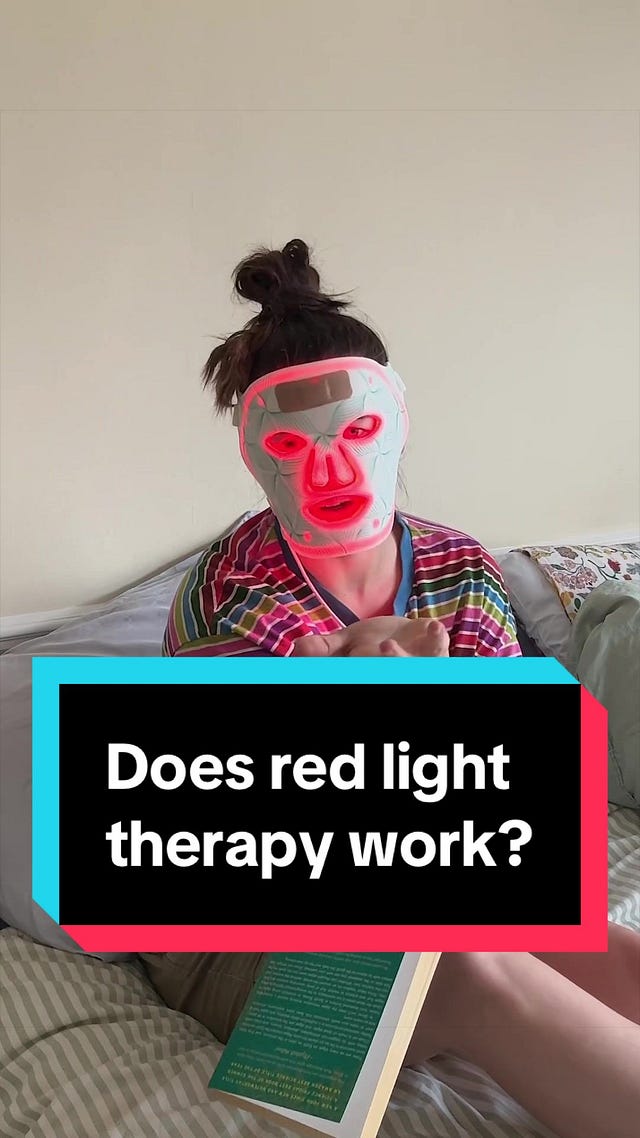
 Tiktok failed to load.
Enable 3rd party cookies or use another browser
The “dialogue with yourself” format is a standard type of TikTok, where people act out imagined conversations to make a point. At least, that’s how TikToks are now. Five years ago it was a lot of “silent pointing at text in the air” and there is of course also the evergreen “talking to camera” which lately has been spiced up a bit with a variety of tiny microphones clipped to random objects. The way to be noticed on TikTok is to follow the format that works for others, so you end up with these waves where every other video follows whatever the current familiar style is.
If that all sounds completely alien, just know that beyond your newsletters and magazines and other written articles is a whole other form of communication grabbing millions of people’s attention. You don’t have to like it, but if you care about how information is conveyed to the masses, you should take it seriously.
A few weeks ago I was a guest at an event for health creators. These are people with medical or related health expertise who make TikToks and/or Instagram reels online to communicate health information on platforms where people look for that kind of information. A lot of what’s out there is misinformation, and these actual experts want to cut through that and grab people’s attention to learn about some real science and medicine.
The health creators invited a few journalists to their event so that our communities could meet. I wrote a bit about my experience on LinkedIn, and I think it can be summed up as: these are still two very different worlds.
I do think I should probably be making (more) videos, but it’s just so, so, SO much easier for me to write something. I don’t have to worry about looking haggard or having no place to film or background noise or having a weird accent or feeling awkward. I don’t have to prepare a script and think about how to squish information into attention-grabbing soundbites and memorize lines. And to be honest, I don’t really want to start over and learn a whole new skill.
Just like today’s science TikTokers, I started out online, where I wrote and managed several science blogs long before becoming a science journalist. I was still a PhD student when I set up my first science blog, met other science bloggers, went to conferences and got my first freelance article published. Blogging is how I learned to write about science, but I never got to practice much with a medium where I had to look into the camera and talk. I’ve tried it a few times on TikTok and YouTube, but even super short videos take me a huge amount of effort and preparation – far more than it takes me to just write something.
But I do think that I need to do more with videos. I just need to find a way that works for me. (Not being on screen myself is probably the solution, considering that neither my most popular YouTube video nor my most popular TikTok even show me on screen!)
Science things to read on the web
A Video Game Could Help Diagnose Depression. By Mariella Bodemeier Loayza Careaga for The Scientist
Bumblebees Have Chimp-Like Problem-Solving Abilities Despite Tiny Brains. By Jake Currie for Nautilus
Mangrove forests are healing after decades of human destruction. By Matt McGrath and Esme Stallard for the BBC
Scientists in ‘autonomous laboratories’ are starting to outsource work to robots. By Katia Riddle for NPR
The mystery of London’s Himalayan parakeets: myths v truth. By Kaya Burgess for The Times. (This amazing interactive article is one of the finalists in the ABSW awards, which have now been announced.)
I relate to this so much! I sort of accidentally built a science communication side-career thanks to Twitter, in that I never intended to do so. I loved writing because could do it without having to be camera-ready, and could do it anytime, anywhere, and the cool space facts and photos could speak for themselves separate from whatever opinions someone much have about my physical appearance or voice and such. And while I've done a lot of on-camera work for documentaries and news interviews and such, that's obviously much easier and less time-consuming that filming, editing, and posting your own content. Writing is really where I feel the most comfortable and most like myself, and I wish it was still as powerful as it felt like it used to be online.
I prefer reading to watching videos. Maybe that's an age thing.