

Science as a symphony orchestra
Scientists are more like orchestra conductors than like rockstars

What if we gave scientists the same attention as we do rockstars? That was the thought process behind a campaign that GQ magazine and the Geoffrey Beene foundation ran in 2009, 2010 and 2021. I liked it the first and second time. In 2010 I wrote about this campaign on The Node (of which I was editor back then) and said “why should overnight reality TV stars get more attention than people who spent years researching how the world works?”
I still agree that we need to profile scientists and not just focus on the work itself. But I don’t think the rockstar analogy holds up. The high profile scientists that were profiled in GQ are the same ones that get press all the time. They’re broadly the same Nobel Laureates, MacArthur grant- and Breakthrough prize winners that already dominate the media. What your don’t see is that they manage entire teams of researchers who keep the work going while their bosses get the credit for all of it.
In that sense, these high profile scientists are not like rock stars, but more like orchestra conductors or concert soloists.
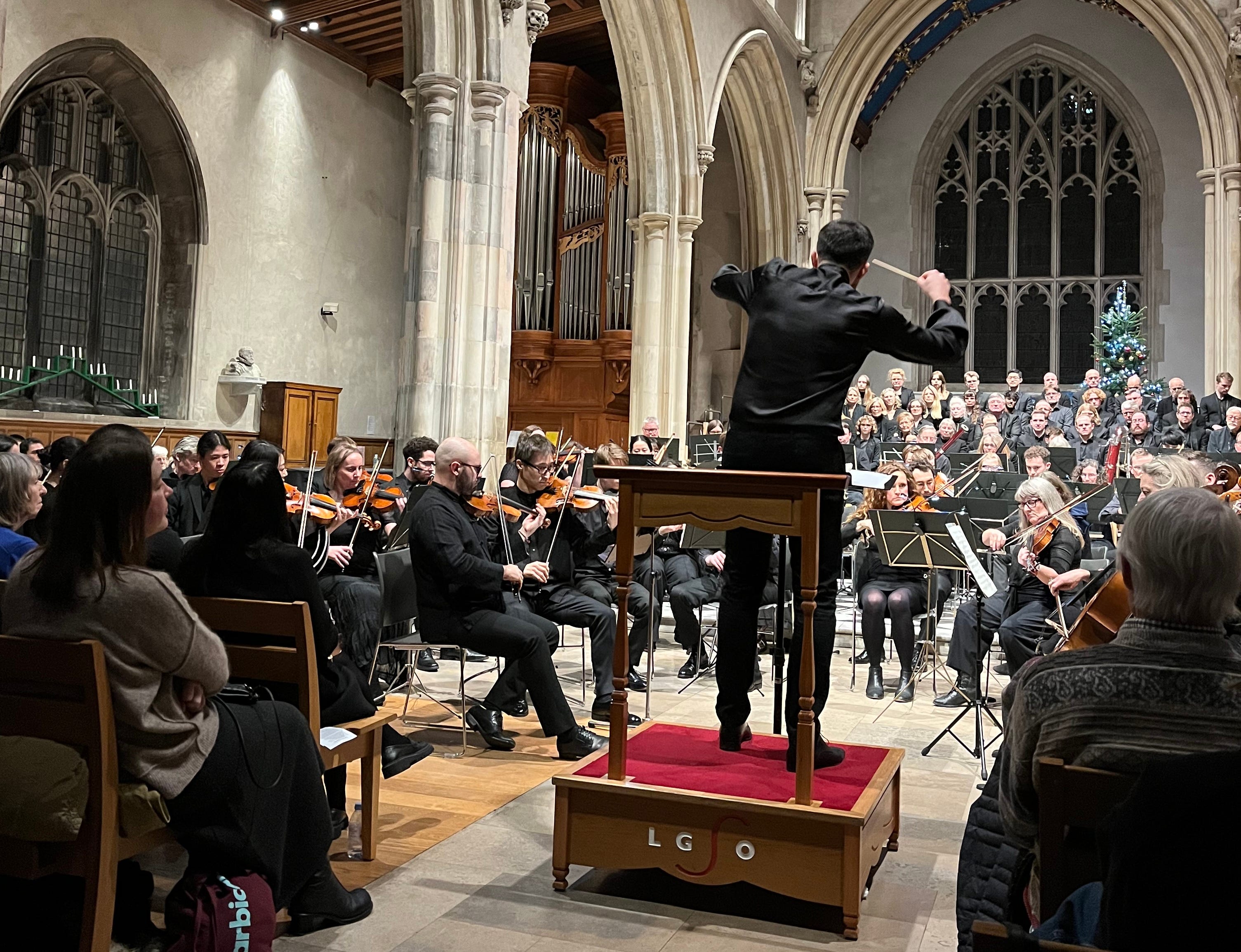
When I’m not writing about science I spend a good chunk of my free time playing violin in orchestras. I have been doing that throughout all my science degrees and my period in research labs, and the parallels between orchestras and research groups are striking.
Concert announcements will include the name of the conductor and any soloists, but there are dozens of other musicians involved. They’re not mentioned by name on the poster, only as a collective “orchestra”. Their individual names will be in the programme, but you’re not likely to know most of them. And if an orchestra changes these individual orchestra members, they will still play the same instruments at the same level. The symphony as a whole will still sound just as good regardless of who is playing - but if these musicians weren’t there at all you would notice.
A research group is similar. While you might know the name of a Nobel Laureate or other high profile researcher, you don’t know the names of all their PhD students and technicians who do the day-to-day work. Their names are on the papers, and in the acknowledgements of their supervisors’ slide presentations, but you’re not likely to know most of them. You probably wouldn’t notice if a professor’s PhD student moved to another lab or if a new technician joined the group — but if there was nobody in the lab and the work stopped entirely, you would notice.
So I think that rather than considering these big name high profile scientists as “rock stars”, we should think of them as conductors or concert soloists. They are the names that draw in the funding and the names that get awards and press mentions. But they could not do what they do without their orchestra of a research team.
The challenge for science writers like me is to bring the human side of science to the foreground, but to not make it seem like the work of a single person. I try to mention in my articles that there was team or a research group involved, because I want the reader to realise that the person I spoke with is supported by a whole team. I don’t know how well that message comes across most of the time, but that doesn’t stop me from trying.
Interesting science links online
Eight facts about air conditioning amid an overheated global debate. By the Carbon Brief team
AI’s black box problem: discovering physics we don’t understand. By Claire Malone for Physics World
Salmon poop is choking Norway’s fjords. By Halldór Kristínarson for The European Correspondent
Hummingbirds and pineapples: why this ancient relationship hits the evolutionary sweetspot. By Jamie Thompson for The Conversation
Zoo summit to tackle ‘misleading’ weather apps. By Angela Ferguson for the BBC.
This one might need some explanation for people outside of the UK. Even though it rains many days of the year here (current heatwaves not withstanding), the rain is often only for an hour or so (and often at night), with the rest of the day being fine. But when people see that tomorrow has a “rain” icon on the weather app, they are entirely avoiding a day trip to the zoo, even if they would have stayed dry. Apparently zoos have been losing out on tons of money because of this, so they’re now trying to come up with a more informative weather display system!
A message to Mixture readers
I am currently running this newsletter at a loss of about £300 per month. That is the estimated cost of income I am missing out on by choosing to write here instead of for paid clients. If you enjoy this newsletter, please consider supporting it with a one-off donation.
I am trialling this call for one-of donations as an experiment to see if it works better than monthly/yearly subscribers. If it doesn’t, I’ll either switch back to subscriptions and occasional paywalls or write FAR shorter newsletters because this science writer needs to feed her cat and pay the electricity bill.
Balancing the single and the collective contributions is hard. Stories about single people are easier to connect with, but can omit the work of the N other authors / students / support staff.
Science is not a saga of individual grand achievements, but a string of small "what if?" questions asked to nature.
Thanks for writing this! It really speaks to several tendencies in our society, namely our obsession with individuals and our hero complexes