

Numbers game
I’m no longer a Forbes contributor, but that just means you get better Mixture content. After the holiday break, though.

As of the start of this month, I’m no longer writing for the Forbes website. Since 2019, I had a space there to write specifically about the overlap of art and science. Lately it was getting more difficult to find topics and angles that I hadn’t covered before. But even when I had something new and original, these posts just didn’t do very well. For example, when I shared a link on Bluesky to this article about a National Gallery exhibit of a painter who captured popular science demonstrations, that social media post was shared and interacted with, but barely anyone clicked through to the actual article. It is a numbers game, in the end, and my combined lack of posts and lack of visitors mean that I was culled from the contributor pool in the latest cuts.

But that’s okay! It was only a tiny part of my income, and it just means that I have more time for other articles and for this newsletter. Some posts that I would have otherwise saved for Forbes will now make it in here.
I’d been looking for a natural end to my time there anyway, because I’m gradually focussing more on writing about other science topics that never fell within the narrow art/science beat I had at Forbes.
I’ve included some of my favourite Forbes posts further down in the newsletter. I own the rights on all of them, so I can resell the content to any magazine that might want to republish them. I used to use an agency for this but they no longer exist. It’s still very possible to buy my articles for republication, though. Just get in touch.
Books
I should have reminded you much sooner, because it’s now much too late to get these for the holidays, but you can get signed copies of “Hey, There’s Science In This” through my website again.
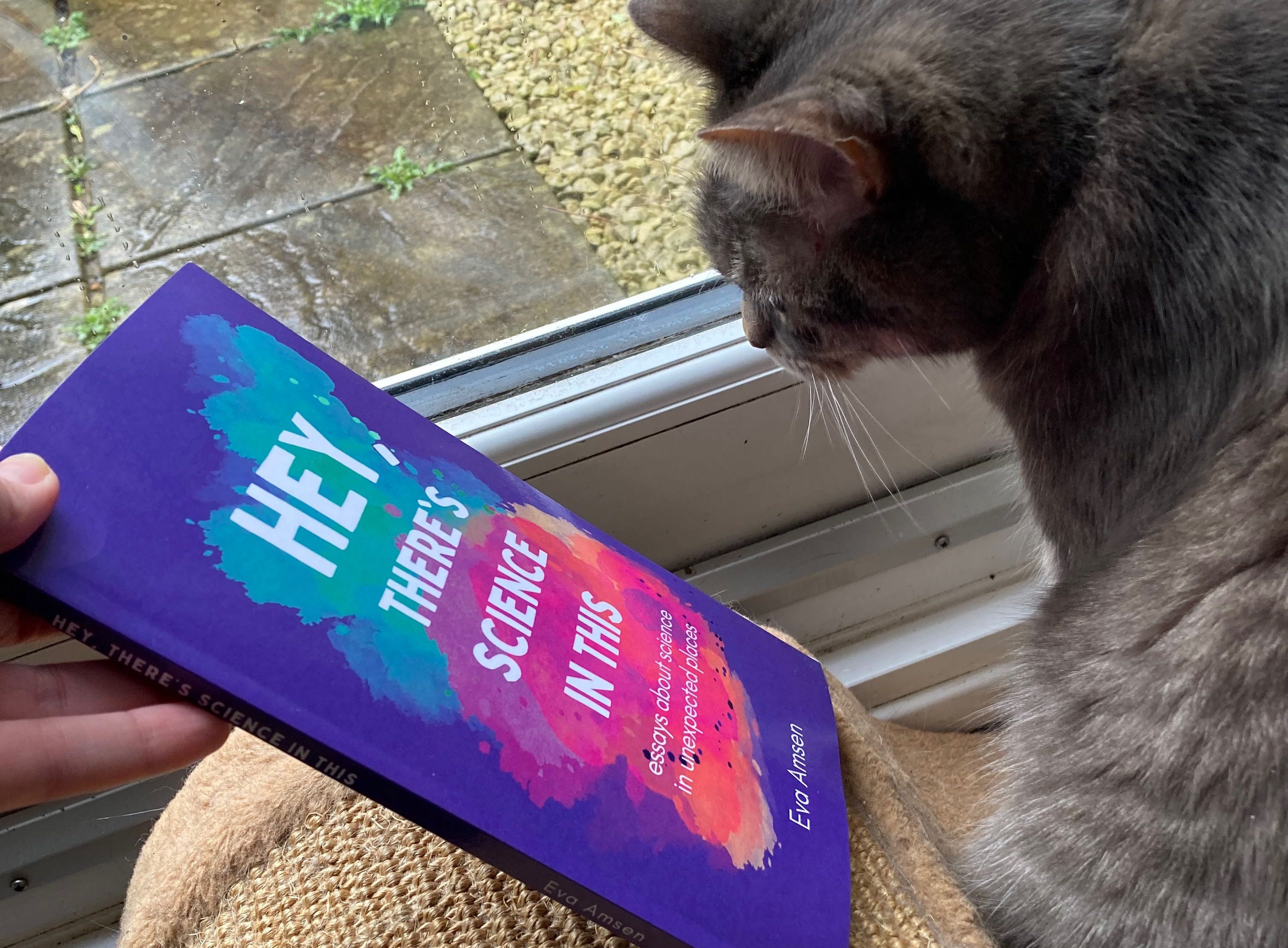
Reviewers called it “an entertaining and thought-provoking read” and “a fun read for the masses”. Unfortunately, I cannot send signed copies of this fun read to the US at the moment due to US customs regulations.
If you are in the US, you can instead buy them directly from the printer, but these aren’t signed. This option is also available from the UK but nowhere else. (They only have printer facilities in these two countries and aren’t shipping abroad).
Everywhere else: Many big national and international bookstore chains can order the book on demand for you, even if they don’t have it in stock. In some countries indie bookstores can also order it, but not in all. (If you want to know why UK indies can’t do this, buy me a drink some time and I’ll rant about it. It’s complicated and stupid.)
Interesting links
Family Dog May Boost Mental Health in Teens Via the Microbiome. By Laura Tran for The Scientist
‘Caustic’ light patterns inspire new glass artwork. By Michael Banks for Physics World.
The Dalí Foundation launches an art and science platform with five major research centers in Barcelona. By Antoni Ribas Tur for ARA
‘The images could be much older’: Analysis of rocks shows Neanderthals made art at least 64,000 years ago. By Paul Pettitt for LiveScience
’Chemistry is incredibly complicated’: The interface between chemistry and art. By Julia Robinson for Chemistry World
The Astronomical Problem of Space Junk. “There’s More To That” podcast episode with Ari Daniel and guests Samantha Lawler and Dan Falk
“They Usually Aren’t Second Tier”: When Wolves Adopt Pups From Rival Packs. By Katie Spalding for IFLScience
Jackson Pollock Painted Like Children Do, Fractal Analysis Shows. My very last post for Forbes.com! (I wish I had known it would be my last so I would have made it more special, but some of my all-time faves are further down in this newsletter)
☕ If you like the links I collect for you in this newsletter, but don’t want to commit to a subscription, please consider a small tip via Buy Me A Coffee. It keeps me motivated to continue to curate cool science links! ☕
Forbes highlights
These were some of my favourite posts I wrote for the Forbes site. If you’re an editor on a budget and see something here or in my archives there that you want to republish, let me know and I’ll give you a reasonable rate. (It’s cheap for small indie magazines, student-run papers etc, but I charge more to magazines who could afford to hire me directly…)
Millions Of Borderlands 3 Players Have Helped Microbiome Research
George Washington Carver Was An Artist Long Before He Became A Peanut Scientist (this one is also in HTSIT! Buy the book!)
Phosphine Data Which Hinted At Possible Life On Venus Also Inspired Musical Composition
Aerosol Studies Are Helping The Vienna Philharmonic And Other Orchestras Stay Safe From Covid-19
Sea Salt And Unstable Paints Explain Why Murals Chip And Fade Away
The Art Hidden In The World’s Largest Nuclear Fusion Reactor
High School Students Do Better In Science, Math And English If They Also Take Music Lessons (by far my most popular article! I think it must have been shared among educator communities.)
What Does A Coronavirus Look Like? (Interview with David Goodsell)
Chemistry Reveals The Hidden Materials In Traditional Indian Paints
Snapshots Of Weather Extremes Don’t Paint The Full Picture Of Climate Change
Stranger Things And The History And Neuroscience Of Music Therapy (This one also ended up in the book, and is relevant again now that Season 5 is finally (half) out!)
Phosphine Data Which Hinted At Possible Life On Venus Also Inspired Musical Composition
Holiday break!
I’m skipping a few Mixture-Fridays for the winter holidays, and to give me some time to rethink how this newsletter will look in 2026. (Tell me what you would like to see more of!) Don’t worry, during this period, paid subs are paused so that people don’t end up paying for nothing. See you in 2026!
Meanwhile, if you want more regular updates of what I’ve been up to, you can follow me on Bluesky. This is one of my recent posts there: